
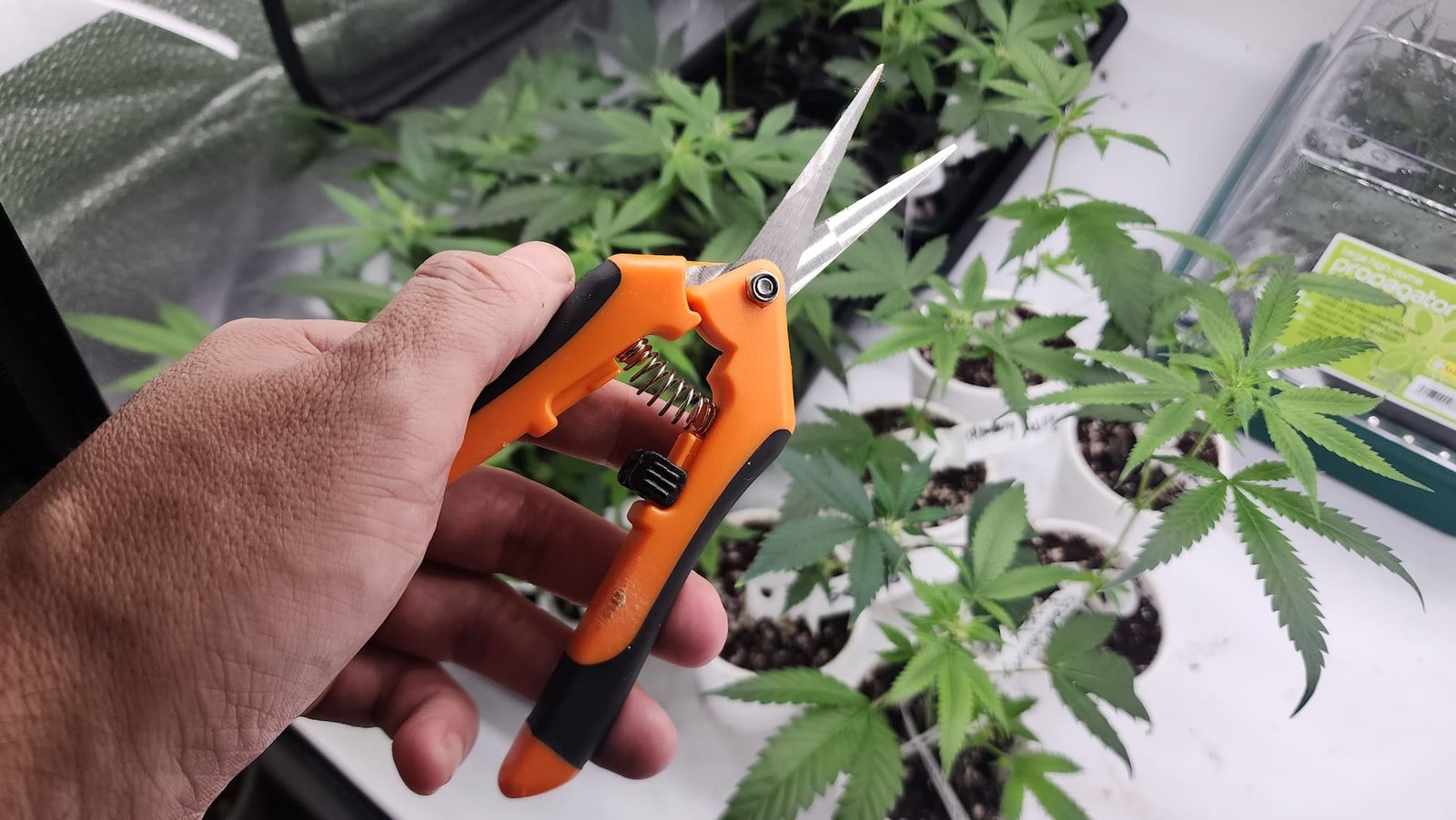
If you’re not yet keeping mother plants, we highly recommend it. It’s an essential part of cultivation and one that allows growers to select rare, unique phenotypes that may never be found again when running the same strain.
Keeping a mother library is hard work, though, and requires a certain proficiency for taking clones. Having been through the good, the bad, and the ugly over the years, I wanted to give you 5 quick cloning tips that I wish I had learned and followed earlier in my growing career.
Squeeze Out Your Jiffies!
Jiffy pellets are one of the most common options for rooting clones, but a lot of people don’t use them the right way in the beginning. Don’t make the mistake of leaving them soaking before you add your cutting. Super moist jiffies can mold clones quickly.
Instead, give each jiffy a light squeeze to remove 50 to 75% of the moisture inside. This will allow the cutting to have more oxygen available and reduce the risk of mold or rot within the dome.
We have a video on YouTube, intended for cannabis seeds, but can also be used to gauge the correct moisture level for clones: watch video here.
Keep Your Mother Plants Healthy
Mother plants can pick up pathogens, which can completely decimate any attempts to take clones from the mom. It’s easy to think you’re doing something wrong when your clones start dying or molding each time, but often the answer isn’t in the clone dome; it’s in the mother room.
Be careful when introducing new clones, especially from other environments. These should ideally be kept in a separate quarantine to avoid passing diseases on to mother stock.
Focus on your mother plants’ immune systems. By ensuring the plant is healthy and happy, and is being provided everything it needs to build a strong immune system, you can greatly reduce the risk of contaminated cuts that don’t root.
Misting Your Cuts Isn’t Necessary
If you’re like me, you followed all the online advice for years about spraying clones with a mist. But the reality is it often causes more harm than good. Clone domes need to be humid, but not above 90%. Spraying clones will increase the risk of mold and slow down the rooting process, especially if the mother stock has any health problems. This water can pool at the top of the plants’ growth and cause mold to form there.
Most clones do just fine when placed inside of a sealed dome. Especially when using Jiffy pellets. Within a couple of hours from putting the plants in the sealed dome, you’ll start to see condensation on the inner side of the lid, showing that the inner conditions have the humidity levels needed for clones to root.
If you do want to increase humidity within the dome, you should do so by spraying the inside of the dome lid, rather than the plants themselves.
Use a Rooting Hormone
Most cuts will still root without the use of rooting hormones, but using them can increase the overall success rate and decrease the time it takes for the cuttings to root.
There are products like Dynaroot out there that have a bunch of good hormones in. For cannabis, you want to use the softwood variety.
Lately, I’ve been skipping the manufactured hormone products and doing things the old-fashioned way, using fresh Aloe Vera to dip the cuttings into. The inner gel-like substance is packed with beneficial hormones that work great in increasing rooting speeds.
Just keep in mind that Aloe Vera can host pests, so wash any piece of the plant you cut off before using it.
Take Backup Cuts
Taking one cut from your plant and hoping it roots is a risky lottery to play. Even skilled growers may not get every cut to the root. Instead, plan for possible failure by taking multiple cuts. It’s common to take 2 cuts, but I’ve found it’s better to be safe and take 4 cuts per plant.
This not only gives one a better chance of ending up with a successfully rooted cut, but if multiple root it allows you to pick the healthiest, best-structured clone from the bunch.
Jiffy pellets are only a couple of rands each, and I can assure you that holding onto a winning phenotype is worth the additional investment.
Don’t Vent Your Domes Too Early
Removing the clone dome lid for a bit each day is good for reducing the risk of molds, but doing so too quickly can cause problems. When the humidity drops too much and for too long, cuttings that are in the process of forming a callus (essential for rooting) can be disturbed.
This can dramatically increase the amount of time it takes for the clones to root, and some may even fail to do so.
I’ve found leaving things sealed for 36 hours before opening the dome lid has given me much better results. Here’s what I’ve found has returned the highest rate of rooted clones, consistently:
- Take cuts and place them into the dome inside of Jiffy pellets.
- Don’t spray anything, just clone the dome and any vents.
- Leave for 36 hours.
- After 36 hours, remove the dome for no more than a minute, removing moisture buildup on the inside of the dome with a clean paper towel.
- 24 hours later, repeat the dome lid process, but extend to 3 minutes of open air
- Day 4 and 5, repeat the 3-minute opening.
- Day 6, many cuts have rooted. Open the vents to 50%.
- Day 7, fully open vents and begin the hardening off process.
- Introduce to open air once clones are hardened off and don’t wilt under ambient humidity.
Trim The Fan Leaves
This is often more of a preference than a rule, but I’ve found good success by using it. The goal here is to cut your fan leaves in half on your clone. You achieve two things. First, you reduce the overall humidity inside the dome, allowing for more space between clones – reducing mold risks. Secondly, you allow the clone to focus less on photosynthetic growth and more on the real task at hand – rooting.
pH Balance Your Water
Make sure to pH balance your water before soaking your Jiffy pellets. Even though the clones aren’t actively growing during the rooting process, by having your water at a reliable pH (5.5 to 6.5) it ensures that when roots do develop, that the plants are able to absorb the micronutrients in the water, helping build the initial push.
Control Your Temperatures
Clones root best in temperatures between 22’C and 27’C. Below 20’C the rooting process can become noticeably longer and be a bit more tricky to achieve the same rooting rates. To compensate, most growers will use a heat mat to keep the clones warm. But avoid getting them too hot either, as this can accelerate mold proliferation.
Important note: When using a heating mat, it’s easy to over-heat your clones. Always check to make sure the temperature inside the dome isn’t spiking above the ideal range when using one. A thermostat is usually used to control the temps, but many don’t come with a thermostat controller. In these cases, elevate the clones above the heating bad to get only residual heat.
Taking Cuts In Early Flower Can Give You Time
We’re often told to take cuts before we flip, but doing so can leave you with a large area being used by your clones long before harvest is close. By taking cuts in week 1 or 2 of flower, you can give yourself a bit of a break by forcing the clones to reveg before going into full grow mode.
This transition can take around 3 weeks. You will have to deal with some reveg growth, but for larger pheno hunts where one is looking to maximize the hunt and minimize the amount of space required, it’s a useful tool to have at one’s disposal.
Conclusion
Cloning is a process that takes practice to perfect, and even just the variables of one’s environment and genetics can give varying results. We hope you could at least take one tip away from this article to help improve your cloning process.