
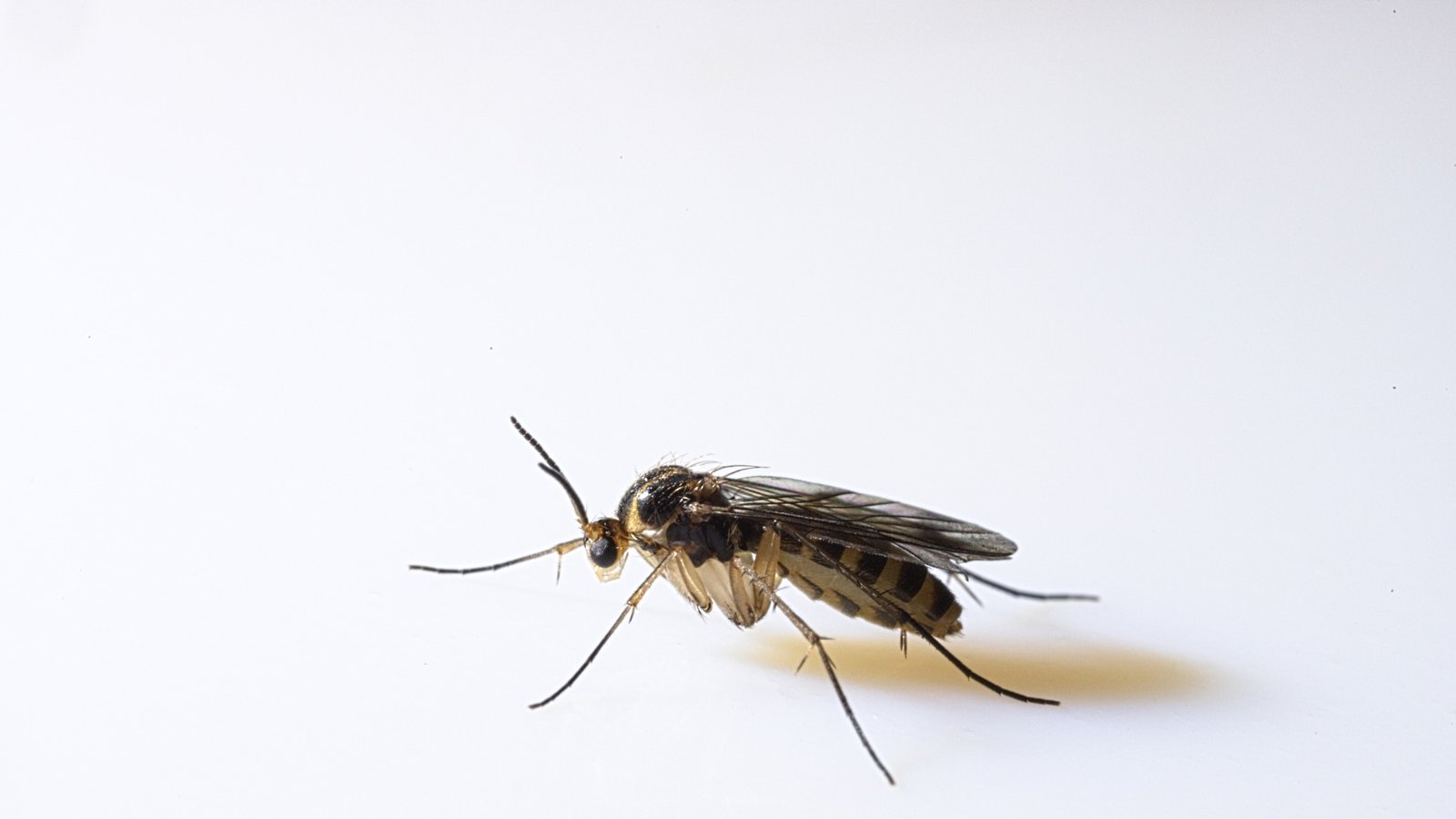
Fungus gnats are small, mosquito-like flies, typically black or dark grey, with long legs and a clumsy, drifting flight. You’ll often spot them hovering around the soil surface, especially after watering. The adults, while annoying, aren’t the main issue. The real trouble comes from their larvae.
Females lay eggs in moist soil, and once hatched, the larvae settle in the top couple centimeters of the medium, feeding on organic matter and sometimes the delicate root hairs plants rely on for water and nutrient uptake. It’s a hidden root problem masquerading as a flying pest.
Identifying Fungus Gnats
They’re easy to overlook if you’re not paying attention, but once you know what to look for, they’re unmistakable. You might notice tiny flies lingering above the soil or near pot drainage holes, or catch sight of clear, white larvae with black heads in the soil. Plants may show slowed growth, odd wilting, or yellowing, particularly in seedlings or clones. Green algae or slime on the soil surface is another clue, as gnats thrive on it. Brown, mushy roots are a red flag, especially in young plants. To confirm, give the pot a gentle shake or disturb the soil, if a cloud of gnats takes off, you’ve got them.
Why They Matter
Fungus gnats may not seem as destructive as caterpillars or spider mites, but their damage builds quietly over time. Larvae chew on roots, especially in vulnerable young plants or clones, disrupting nutrient and water absorption. This stress can stunt growth and invite diseases like Pythium, which causes damping off. They flourish in soggy, overwatered soil, creating oxygen-poor zones that harm roots further. In the worst cases, weakened root systems cause plants to stall, with yellowing leaves and persistent nutrient deficiency symptoms despite feeding. In high-humidity setups with coco or peat, they can multiply rapidly.
Preventing Fungus Gnats
The good news is they’re manageable if you disrupt their breeding grounds, primarily wet topsoil. Let the top inch or two of soil dry out between waterings, avoiding overwatering. A layer of perlite or sand over the soil can deter egg-laying. Clear away runoff or standing water, as gnats love it. Good airflow near the plant base helps, since gnats struggle to fly in breezy conditions. If you’re using organic teas or living soil, stay vigilant, as decaying organic matter is a gnat buffet.
Biological Controls
Nature offers effective allies against gnats. Soil-dwelling mites like Hypoaspis miles (Stratiolaelaps scimitus) prey on gnat larvae, while nematodes (Steinernema feltiae) invade and kill larvae in the soil. BTi (Bacillus thuringiensis israelensis), a bacteria, targets larvae when mixed into water. These methods won’t eliminate an infestation instantly but shift the balance in your favor with consistent use.
Tackling an Infestation
If gnats have taken hold, combine strategies for best results. Start by trapping adults with yellow sticky traps placed just above the soil to monitor and reduce egg-laying, bug zappers are ineffective. To kill larvae, use BTi (found in products like Mosquito Bits) in your water, it’s safe for plants but lethal to larvae. Nematodes applied to the root zone are another strong option. A diluted hydrogen peroxide solution (1:4 with water) can oxygenate soil and kill some larvae, but use it cautiously in living soil to avoid harming beneficial microbes. Environmentally, reduce watering frequency, improve drainage, and increase airflow. In sealed rooms, lower humidity slightly to make conditions less inviting for gnats.
Chemical Options
Synthetic pesticides are rarely necessary. Fungus gnats respond well to organic methods and better grow practices. In extreme cases, imidacloprid drenches or insect growth regulators like cyromazine can work, but they’re risky for cannabis, especially beyond early vegetative stages, due to residue concerns. Stick with BTi, nematodes, and environmental tweaks for safer, effective control.
Closing Thoughts
Fungus gnats are a pest of poor habits, not a crop-killer, but they can chip away at root health, leading to stunted growth, yellowing, or disease if ignored. Act early by drying out soil, using predators or BTi, and tightening up your watering routine. Focus on the larvae in the soil, not just the flying adults, if you see gnats, larvae are already at work. With consistent effort, you’ll keep your plants healthy and thriving.